Buying a used car in Dubai used to be a safe bet. Then the 2026 storms hit. Now, the market is full of vehicles that look pristine on the outside but hide expensive, dangerous secrets underneath. If you’re hunting for a deal, you need to know how to spot flood damage before that “bargain” turns into a financial nightmare.
Most sellers will deep-clean the seats and wax the paint. They won’t, however, fix the slow corrosion eating away at the computer brains of the car. We’re here to help you see past the shine and avoid a lemon.
Table of Contents
Start With the "Sniff Test"
Your nose is your best tool for detecting signs of water entry. Water trapped in carpets or behind door panels creates a distinct, earthy, musty smell that is almost impossible to kill. If you open the car door and it smells like a wet dog or a damp basement, walk away.
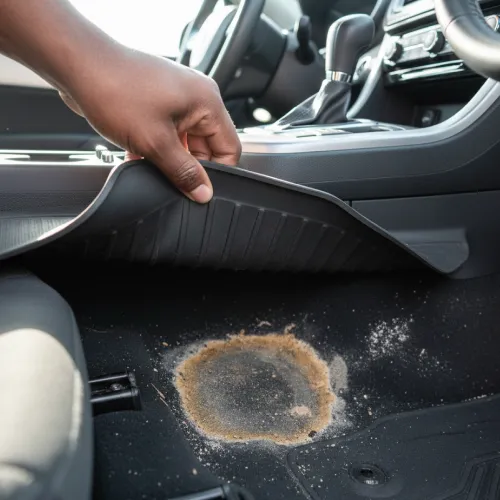
Be wary of cars that smell too good. If the interior is overpowered by industrial air fresheners, the seller is likely hiding something. Check under the floor mats. Feel for dampness or a crunchy texture in the carpet fibres, which indicates silt has dried deep inside. It is always best to get a professional inspection.
How Do You Identify Hidden Flood Damage?
The best way to identify hidden flood damage is to look where detailers rarely go, like under the dashboard or inside the seat rails. Pull the seatbelts all the way out. Do you see a faint water line or a tide mark near the end? That’s a smoking gun.
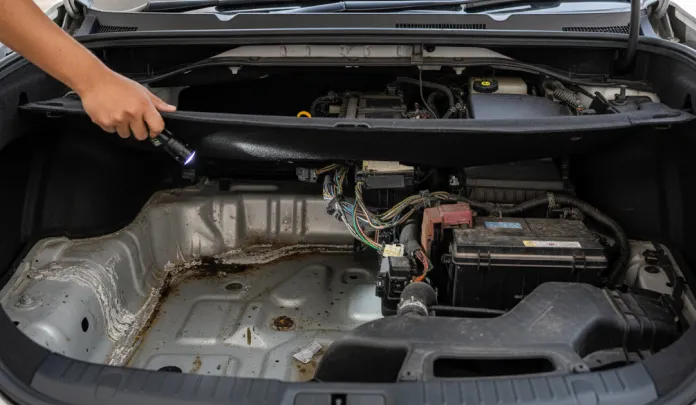
Check the tracks the seats slide on. These are usually bare metal. In a dry Dubai car, they should be clean. If they show bubbling rust or orange pitting, that car has been sitting in water. Also, use a flashlight to look under the dash for green oxidation on copper wires. Copper shouldn’t turn green unless it has been swimming.
Under the Hood: Sand and Silt
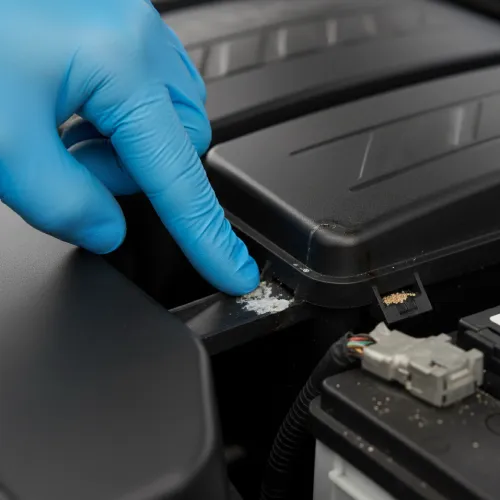
Dubai floodwater isn’t just water; it’s a mix of fine desert sand, oil, and grime. A seller can steam-clean an engine, but they can’t get everything. Look inside the alternator, the radiator fins, and the crevices of the fuse box.
If you find fine silt packed into these tight spots, the car was likely submerged. Pull the engine oil dipstick. If the oil looks like a milky latte or a chocolate shake, water has entered the engine. This is a massive red flag. Water in the engine leads to catastrophic failure, often months after the storm.
Electrical Gremlins and Computer Errors
Modern cars are basically laptops on wheels. Water and sensitive sensors are a recipe for disaster. During your test drive, turn on every single gadget. Do the power windows stutter? Does the infotainment screen flicker?
Sometimes the damage doesn’t show up immediately as a total failure. Instead, it shows up as “ghost” errors on the dashboard or a sunroof that opens on its own. If the ABS or airbag lights stay on for even a second too long, the car’s wiring harness might be rotting from the inside out.
The Real Cost of a Bad Call
Why does this matter? Because a car with a history of being underwater is often a total loss in the eyes of insurance companies. Even if it runs today, the heat in Dubai will accelerate the corrosion of every electrical connection in the vehicle.
You could end up with a car that randomly stalls on the Sheikh Zayed Road or, worse, one where the safety systems fail when you need them most. It isn’t just about the money; it’s about your safety on the road.
Final Thoughts
The 2026 storms changed the used car market. While there are still plenty of great vehicles out there, the “too good to be true” deals are now more dangerous than ever. Don’t let a slick salesperson rush you. Take your time, use your senses, and get a professional opinion.
FAQ
Short answer? No. Not for a price that makes sense. You’d have to replace the entire wiring harness and every electronic control module. It’s almost always cheaper to just buy a dry car.
If the car has been officially "written off" or labelled as "salvage," you’ll have a hard time. But many sellers fix these cars privately to avoid that label. That’s why a physical inspection is your only real protection.
Standard surface rust on a tailpipe is okay. Orange, flaky rust on the bolts under the seats or inside the door hinges? Definitely not. That’s a sign of a swim.
If you buy a car with pre-existing damage, your insurance company might deny claims related to those issues. You don't want to be stuck with a bill that's worth more than the car.